Early Warning Clues a Tree on Your Roof Needs Removal Fast
Hidden Dangers of a Tree Resting on Your Roof
Finding a tree on your roof after a storm is scary and stressful. You worry about your family, your home, and what your insurance will say. Quick action matters, because even a tree that looks like it is just resting can quietly damage your roof and the structure under it.
In our hot, humid Texas weather, roof materials can soften and weaken. As hours and days pass, the weight of the tree can press deeper into shingles, decking, and framing. Late summer storms can bring more wind and rain, which can shift the tree again and open new leaks. Trying to handle it yourself is risky, especially around ladders, slick shingles, and nearby power lines. Professional tree on roof removal in Katy is the safest way to protect your home and keep your insurance claim on track.
Subtle Signs the Tree Is Actively Damaging Your Home
Even if the tree is not breaking through the roof yet, it can still be causing problems you might not notice right away.
Small but serious roof damage can show up as:
- Lifted or curled shingles near where the trunk or branches rest
- Cracked or shifted tiles that look a little out of line
- A sagging or wavy roofline that was straight before the storm
- Gaps you can see between shingles, especially along ridges or valleys
From the ground, you might notice a ridgeline that looks wobbly, dipping eaves, or gutters pulling away. In the Katy and greater Houston area, heat and humidity can speed up damage where shingles are already lifted, letting water slip in with each new storm.
Inside your home, there are warning clues you should not ignore:
- New ceiling cracks or seams that open up in the rooms under the tree
- Doors or windows that suddenly stick or feel off-center
- Fresh water stains or yellow rings on ceilings or upper walls after rain
- Creaking, popping, or groaning sounds from the attic or upstairs at night
If these changes show up right after the tree hits the roof, that is a strong sign the roof framing is under stress. The weight of the tree may be shifting slowly, putting pressure on rafters and trusses. When that load pushes down on the roof, the force can move down the walls and even reach the foundation.
You may also see:
- New drywall cracks above door frames
- Cracks running from the corners of windows or along wall joints
- Tiny gaps where baseboards pull away from the wall
These are signs that the structure is trying to adjust to the extra load. That is when fast professional help becomes very important.
When a "Stable" Tree on the Roof Is Actually an Emergency
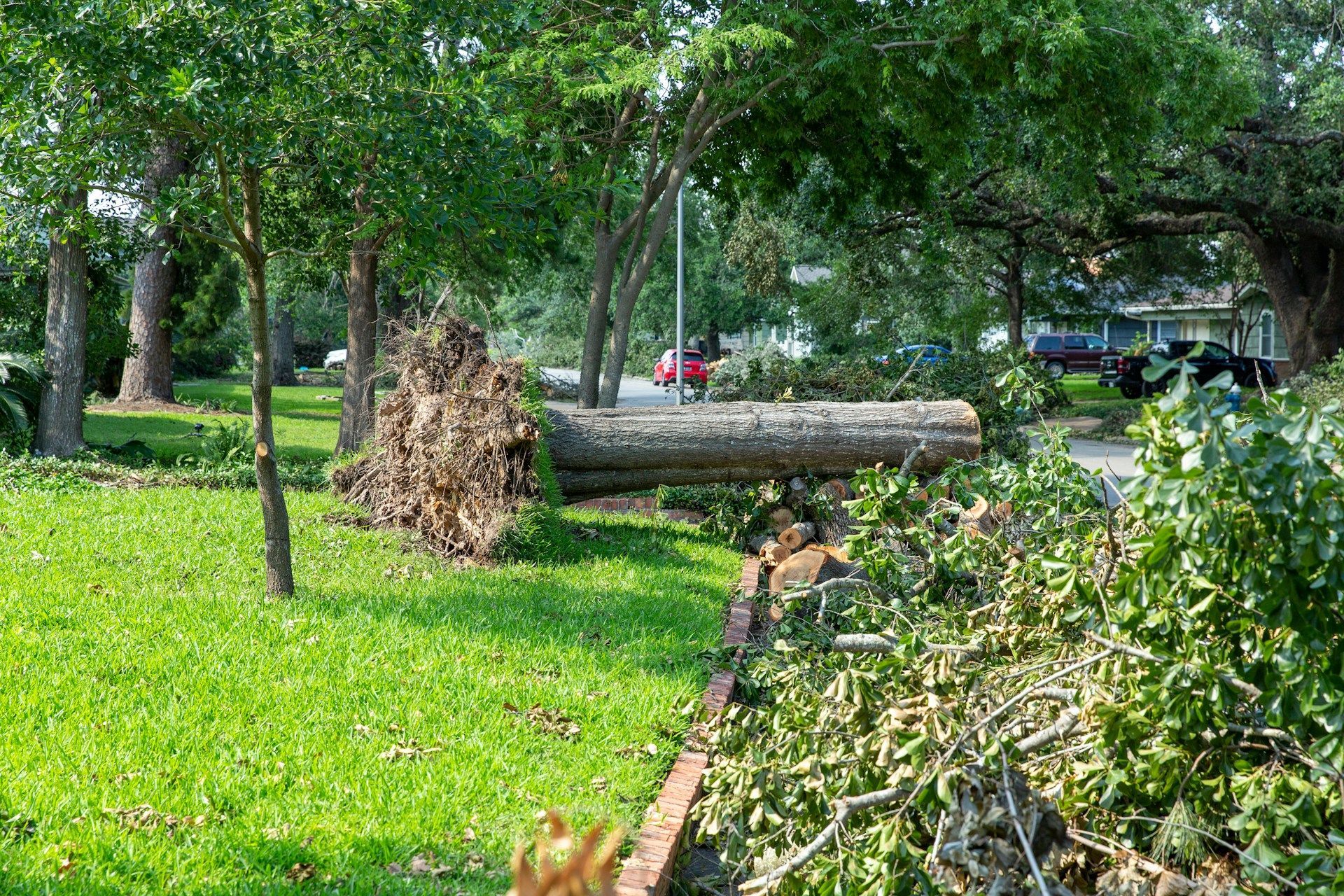
A tree that looks stuck in place is not always safe. As branches dry out, they lose strength, and as the wind shifts, the tree can roll, slide, or twist. A storm that passed through last night can be followed by pop-up showers and gusty wind that move that tree again.
This kind of sudden movement is extra dangerous when the tree is leaning over:
- Bedrooms and nurseries
- Main living areas and playrooms
- Entryways and garages where people come and go
Cracked but not fully broken limbs are another hidden hazard. They may be hanging now, but a bit of wind or more rain can cause them to snap and punch fresh holes in the roof. Uprooted trees can also disturb the soil around your home. When roots shift, they can pull against buried gas, water, or sewer lines. Over time, that can lead to small leaks, damp spots in the yard, or soft, unstable ground.
If the tree is anywhere near power lines, there is added danger. Branches touching or close to lines can cause arcing that may lead to sparks or fires. Homeowners should:
- Stay away from any area where tree and wires are close
- Avoid touching metal gutters, fences, or ladders nearby
- Stay out of standing water in the yard, which could be energized
Professional crews work with utilities and use the right insulated gear and methods to handle these risks. Treat any tree on a roof near power lines as an emergency, even if it seems calm.
How Pros Handle Safe Tree on Roof Removal in Katy
When trained crews arrive, the first step is a fast but careful assessment. They check:
- Contact with power lines or nearby transformers
- Safe roof access points that will not collapse
- Signs that walls, ceilings, or rafters are already failing
- Extra storm damage like broken fences or hanging limbs
Before cutting anything, the area is secured. Professionals may use cranes, ropes, and rigging from the ground so they do not have to step on weak roof sections. They keep family members, pets, and neighbors at a safe distance and set up work zones to keep everyone clear.
Next comes strategic cutting and controlled lowering. The job is broken into steps:
- Remove smaller limbs first to reduce overall weight
- Cut branches in short sections that are easier to guide
- Use ropes, pulleys, or crane support to lower pieces slowly
- Keep heavy sections from rolling, sliding, or punching new holes
The goal is to protect as much of the remaining roof and structure as possible. Every extra hole or dent can raise repair time and stress, so control is everything.
After the tree is off the roof, cleanup and protection start right away. That often includes:
- Hauling away limbs, trunk pieces, and loose debris
- Placing temporary tarps or covers over damaged roof areas
- Securing exposed spots before the next round of rain
Good documentation is also helpful. Clear photos and written notes about what was done can support homeowners insurance claims and help adjusters understand the damage. From there, a roofer or structural professional can do detailed inspections, and additional trees around the yard can be checked to prevent repeat problems.
What to Do Immediately After You Find a Tree on Your Roof
If you wake up or come home to find a tree on your roof, focus on safety first. Steps you can take include:
- Move family members and pets away from rooms under the damaged area
- Avoid sleeping or spending time under that part of the house
- If safe and easy to reach, shut off power to affected rooms, especially if water is leaking near lights or outlets
- Stay off the roof and away from damaged ladders, decks, or patios
For insurance, smart documentation helps the process go more smoothly. From safe spots on the ground or inside, you can:
- Take clear photos and short videos from several angles
- Capture both outside and inside signs of damage
- Note the date, time, and what kind of weather was moving through
Good records support coverage for emergency tree on roof removal in Katy and follow-up repairs.
As far as who to call and in what order, start with emergency services or utilities if you see downed power lines, smell gas, or see any signs of fire. Your homeowners insurance carrier can help open a claim number and explain what details they need. From there, a local tree service with experience in storm response and roof-related work can step in to remove the tree safely and help protect your home.
Protect Your Home Before the Next Storm Hits
A tree that seems to be simply resting on your roof is not a problem to put off. Damage can grow quietly over hours and days, turning a small issue into a major repair. Regular tree risk assessments before peak storm periods can catch weak limbs or leaning trunks early, especially on large trees close to your house.
Apple Tree Service provides expert tree care, removal, land clearing, and emergency storm response for homeowners and businesses in Katy and the greater Houston area. With careful inspections, preventive pruning, and professional tree on roof removal in Katy, we work to keep your family safe, your roof secure, and your peace of mind steady when storms roll through.
Get Started With Your Project Today
If a storm has left a tree on your home, our team at Apple Tree Service is ready to help you restore safety and peace of mind quickly. Learn more about our
tree on roof removal in Katy and related services so you know exactly what to expect before we arrive. For fast scheduling and clear answers to your questions,
contact us today so we can assess the damage and get your property secured.